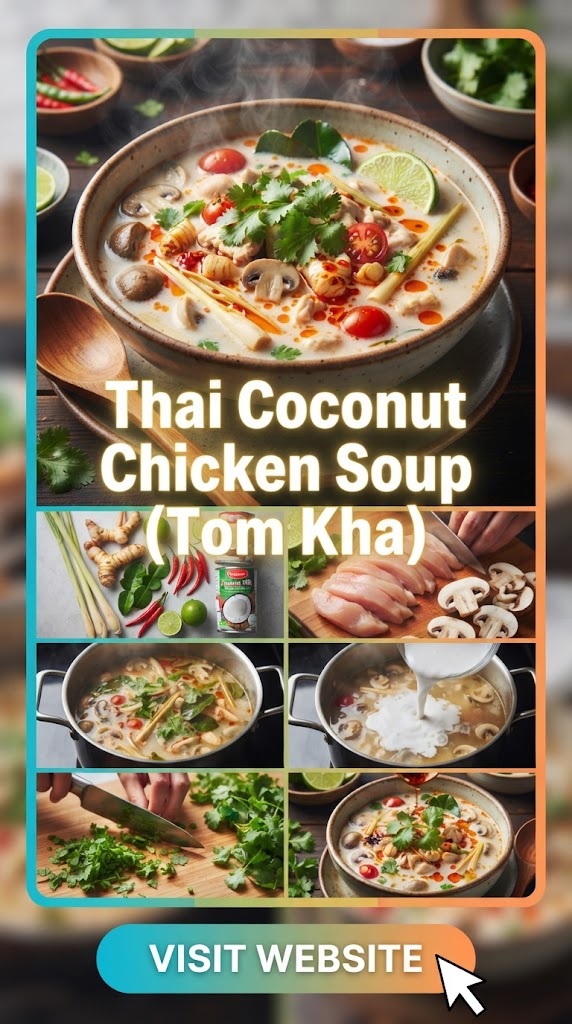
Thai Coconut Chicken Soup (Tom Kha)
Thai Coconut Chicken Soup (Tom Kha Gai)
Thai Coconut Chicken Soup, traditionally known as Tom Kha Gai, is a fragrant, creamy, lightly spicy Thai soup made with tender chicken, coconut milk, aromatic herbs, mushrooms, lime juice, and fish sauce. It is one of those dishes that manages to taste comforting and refreshing at the same time. The richness of coconut milk is balanced by bright lime, savory fish sauce, fragrant lemongrass, and the gentle heat of Thai chilies.
This homemade version is designed to be approachable while keeping the distinctive sweet, sour, salty, spicy, and aromatic character that makes Tom Kha Gai so special. It is perfect for a cozy weeknight dinner, an impressive starter for guests, or a warming bowl when you want something flavorful without spending hours in the kitchen.
What Is Tom Kha Gai?
Tom Kha Gai translates roughly to “boiled galangal chicken.” “Tom” refers to a boiled or simmered dish, “kha” means galangal, and “gai” means chicken.
Traditional Tom Kha Gai gets much of its characteristic flavor from galangal, an aromatic root related to ginger but with a sharper, more citrusy and pine-like flavor. Lemongrass and makrut lime leaves contribute additional layers of fragrance, while coconut milk gives the soup its signature creamy texture.
Although restaurant versions can vary, the classic flavor profile generally combines:
- Creamy coconut milk
- Tender chicken
- Galangal
- Lemongrass
- Makrut lime leaves
- Mushrooms
- Fish sauce
- Fresh lime juice
- Thai chilies
- Fresh cilantro
The result is a soup that is creamy without being heavy and spicy without overwhelming the other flavors.
Why You’ll Love This Thai Coconut Chicken Soup
There are plenty of reasons to make Tom Kha Gai at home.
1. It’s incredibly flavorful
Every spoonful combines creamy, savory, sour, spicy, and aromatic notes. The soup has much more complexity than its relatively simple preparation suggests.
2. It comes together quickly
Once your ingredients are prepared, the soup can be cooked in roughly 25–30 minutes.
3. It’s comforting but refreshing
Coconut milk makes the soup satisfying, while lime and fresh herbs keep it bright.
4. It’s easy to customize
You can adjust the spice, add more vegetables, substitute proteins, or make it richer depending on your preferences.
5. It’s excellent for weeknight dinners
Most of the work involves slicing ingredients and allowing the aromatics to infuse the broth.
Complete Tom Kha Gai Recipe
Recipe at a Glance
Cuisine: Thai
Course: Soup
Prep Time: 15 minutes
Cook Time: 25 minutes
Total Time: About 40 minutes
Servings: 4–6
Difficulty: Easy to moderate
Ingredients
For the Soup
- 1 ½ pounds boneless, skinless chicken thighs, thinly sliced
- 4 cups unsweetened coconut milk
- 2 cups chicken broth
- 8 ounces fresh mushrooms, sliced
- 1 stalk lemongrass
- 1 piece fresh galangal, about 2–3 inches
- 5–6 makrut lime leaves
- 3 cloves garlic, lightly crushed
- 2–4 Thai bird’s eye chilies, lightly crushed
- 2 tablespoons fish sauce
- 1–2 tablespoons brown sugar or palm sugar
- 3 tablespoons freshly squeezed lime juice
- ½ cup fresh cilantro leaves
- 2 green onions, thinly sliced
- 1 small tomato, cut into wedges, optional
- 1 tablespoon neutral cooking oil, optional
For Garnishing
- Fresh cilantro
- Thinly sliced green onions
- Extra Thai chilies
- Lime wedges
- A small drizzle of chili oil, optional
- Freshly sliced red chili, optional
Ingredient Notes
Chicken
Chicken thighs are especially good for Tom Kha Gai because they remain juicy during simmering. Their slightly higher fat content also contributes additional flavor.
Chicken breast can absolutely be used if you prefer a leaner soup. However, avoid overcooking it because it can become dry.
Slice the chicken into thin, bite-sized pieces so it cooks quickly and evenly.
Coconut Milk
Use full-fat unsweetened coconut milk for the creamiest result.
Avoid sweetened coconut milk intended for beverages or desserts. The soup should have a savory flavor rather than tasting like coconut dessert.
If your coconut milk separates in the can, simply shake the can well before opening.
Galangal
Galangal is one of the defining ingredients in Tom Kha Gai.
It looks somewhat similar to ginger but has a different flavor. Ginger can be used in a pinch, but if you can find fresh galangal at an Asian grocery store, it is highly recommended.
Slice it thinly so its flavor can infuse the broth.
You generally don’t need to eat the galangal pieces. They are mainly used to flavor the soup.
Lemongrass
Lemongrass contributes a fresh citrus aroma.
Remove the tough outer layers, trim the ends, and lightly crush the stalk with the side of a knife. Cutting it into large pieces makes it easier to remove later.
Makrut Lime Leaves
Makrut lime leaves add a distinctive citrus fragrance that is difficult to duplicate.
Remove the tough central stem if desired, then tear or bruise the leaves slightly before adding them to the broth.
As with galangal and lemongrass, these are primarily aromatic ingredients and can be removed before serving.
Fish Sauce
Fish sauce supplies the salty, savory depth of the soup.
Different brands vary in strength, so start with less and adjust toward the end.
Lime Juice
Fresh lime juice is essential.
Add it toward the end rather than boiling it for a long period. This preserves its fresh acidity and keeps the soup bright.
How to Make Thai Coconut Chicken Soup
Step 1: Prepare the Aromatics
Begin by preparing your lemongrass, galangal, garlic, chilies, and makrut lime leaves.
Trim the lemongrass and remove the tough outer layers. Lightly crush the stalk with the side of a chef’s knife.
Thinly slice the galangal.
Lightly crush the garlic.
Gently crush the chilies if you want them to release more heat.
Tear the makrut lime leaves slightly.
Set everything aside.
Why this matters
The aromatics are responsible for much of the distinctive Tom Kha flavor. Crushing or bruising them helps release their essential oils into the broth.
Step 2: Prepare the Chicken
Trim any excess fat from the chicken thighs.
Slice the chicken into thin strips or small bite-sized pieces.
Try to keep the pieces similar in size. This helps them cook evenly.
Pat the chicken dry with paper towels if necessary.
You don’t need to marinate the chicken beforehand because it will absorb plenty of flavor from the coconut broth as it cooks.
Step 3: Prepare the Mushrooms
Clean the mushrooms and slice them.
White button mushrooms, cremini mushrooms, oyster mushrooms, or shiitake mushrooms can all work.
If using shiitakes, remove the tough stems before slicing the caps.
Set the mushrooms aside.
Step 4: Build the Aromatic Broth
Place a large saucepan or Dutch oven over medium heat.
Add the chicken broth.
Add:
- Lemongrass
- Galangal
- Makrut lime leaves
- Garlic
- Thai chilies
Bring the broth to a gentle simmer.
Allow the aromatics to simmer for approximately 8–10 minutes.
This gives the broth time to absorb their flavors.
Avoid aggressive boiling. A gentle simmer is enough.
Step 5: Add the Coconut Milk
Pour in the coconut milk.
Stir gently.
Reduce the heat to medium-low.
Bring the mixture back to a gentle simmer.
Do not allow the coconut milk to boil violently.
A gentle simmer helps maintain a smooth texture.
Step 6: Add the Chicken
Add the sliced chicken to the coconut broth.
Stir gently to separate the pieces.
Simmer for approximately 6–8 minutes, depending on the thickness of the chicken.
The chicken should be fully cooked in the center.
Avoid cooking it for much longer than necessary because overcooked chicken can become tough.
Step 7: Add the Mushrooms
Add the sliced mushrooms.
Continue simmering for approximately 4–5 minutes, or until the mushrooms become tender.
If you’re adding tomato wedges, add them during the final few minutes.
The soup should now be fragrant and creamy, with tender chicken and mushrooms throughout.
Step 8: Season the Soup
Now comes one of the most important parts: balancing the flavors.
Add:
- Fish sauce
- Brown sugar or palm sugar
- Fresh lime juice
Stir gently.
Taste the soup.
You are looking for a balance between:
Salty + Sour + Slightly Sweet + Spicy + Creamy
If the soup tastes flat, it may need more fish sauce or lime juice.
If it is too sour, add a small amount of sugar.
If it needs more saltiness, add a little additional fish sauce.
If it is too rich, a little more lime juice can brighten it.
Step 9: Remove the Aromatics
Before serving, you can remove the large pieces of:
- Lemongrass
- Galangal
- Makrut lime leaves
You can leave them in the pot for presentation, but they are generally not intended to be eaten.
If serving guests, removing the larger aromatic pieces makes the soup easier to enjoy.
Step 10: Finish With Fresh Herbs
Turn off the heat.
Add fresh cilantro and sliced green onions.
Stir gently.
Allow the soup to sit for approximately one minute.
This gives the herbs a chance to release their fragrance without becoming overly cooked.
Step 11: Serve
Ladle the hot Tom Kha Gai into bowls.
Garnish with:
- Fresh cilantro
- Green onions
- Sliced chili
- Lime wedges
Serve immediately.
A bowl of steamed jasmine rice makes an excellent accompaniment.
The Secret to Great Tom Kha Gai
Making a good Tom Kha Gai isn’t simply about following ingredient measurements. The key is understanding the balance of flavors.
The Five Main Flavor Elements
Salty
Fish sauce provides the primary salty and savory flavor.
Sour
Fresh lime juice gives the soup its bright acidity.
Sweet
A small amount of sugar balances the acidity and spice.
Spicy
Thai chilies provide heat.
Rich
Coconut milk gives the soup body and creaminess.
The goal isn’t for one flavor to dominate. The flavors should work together.
How Spicy Should Tom Kha Gai Be?
Traditional versions can be quite spicy, but homemade soup gives you complete control.
For mild soup:
Use 1 Thai chili or omit it.
For medium spice:
Use 2–3 Thai chilies.
For hot soup:
Use 4 or more chilies.
Remember that crushing the chilies releases more heat.
You can also slice the chilies instead of crushing them for slightly more controlled heat.
Can You Use Ginger Instead of Galangal?
Yes.
If galangal is unavailable, fresh ginger is the easiest substitute.
However, ginger has a warmer, sweeter flavor, while galangal is more citrusy and peppery.
For the most authentic flavor, use galangal when possible.
Can You Use Chicken Breast?
Absolutely.
Chicken breast produces a lighter version of Tom Kha Gai.
The important thing is not to overcook it.
Slice the breast into thin pieces and simmer just until cooked through.
Chicken thighs are generally more forgiving and remain juicy longer.
Best Mushrooms for Tom Kha
Several varieties work well.
Oyster Mushrooms
Soft and delicate with a slightly meaty texture.
Shiitake Mushrooms
Deep, savory flavor.
Cremini Mushrooms
Easy to find and hearty.
White Button Mushrooms
Mild flavor and convenient.
Mixed Mushrooms
Using several mushroom varieties creates a more interesting texture and flavor.
How to Make Tom Kha Gai More Creamy
For an especially creamy soup, use full-fat coconut milk.
You can also increase the coconut milk slightly while reducing the broth.
However, avoid making it excessively rich. Tom Kha should still have a bright, aromatic character.
The lime juice is especially important when increasing coconut milk because it cuts through the richness.
How to Make a Lighter Version
For a lighter soup:
- Use light coconut milk.
- Increase chicken broth.
- Use chicken breast.
- Add extra mushrooms.
- Reduce the sugar.
- Add more vegetables.
- Keep the fish sauce and lime balanced.
The soup will be less rich but still flavorful.
Vegetable Additions
Although traditional versions are relatively simple, you can add vegetables for a heartier meal.
Good choices include:
- Baby corn
- Bell peppers
- Snow peas
- Spinach
- Bok choy
- Tomatoes
- Carrots
- Zucchini
- Bamboo shoots
Add firm vegetables earlier and delicate vegetables near the end.
Protein Variations
Tom Kha can be made with different proteins.
Tom Kha Goong
Use shrimp instead of chicken.
Add the shrimp near the end of cooking because shrimp cooks quickly.
Tom Kha Tofu
Use firm or extra-firm tofu.
This is an excellent vegetarian-style variation if you also replace fish sauce and chicken broth with suitable plant-based alternatives.
Tom Kha Seafood
A combination of shrimp, squid, mussels, or other seafood can create a luxurious soup.
Seafood should generally be added toward the end to prevent overcooking.
How to Store Leftover Tom Kha Gai
Allow the soup to cool before transferring it to an airtight container.
Refrigerate promptly.
Stored properly in the refrigerator, the soup is best enjoyed within approximately 3–4 days.
When reheating, use medium-low heat.
Avoid aggressively boiling the soup because coconut milk can separate.
Add a splash of broth or coconut milk if the soup becomes too thick after refrigeration.
Can You Freeze Tom Kha Gai?
You can freeze Tom Kha Gai, although the texture may change slightly.
Coconut milk can separate after freezing and thawing.
If you plan to freeze the soup, cool it completely and store it in an airtight freezer-safe container.
Leave some space at the top because the liquid expands when frozen.
Thaw it in the refrigerator and reheat gently.
If the coconut milk separates, whisk the soup gently while reheating.
Fresh lime juice and herbs are best added after reheating rather than before freezing.
Common Mistakes to Avoid
1. Boiling the Coconut Milk Too Hard
Aggressive boiling can cause the coconut milk to separate.
Keep the soup at a gentle simmer.
2. Adding Lime Juice Too Early
Long cooking can reduce the fresh quality of lime juice.
Add it near the end.
3. Using Too Much Sugar
Tom Kha should have some sweetness, but it shouldn’t taste like sweet coconut soup.
Start with a small amount and adjust.
4. Adding Too Much Fish Sauce
Fish sauce becomes stronger as you add it.
Start conservatively.
5. Overcooking the Chicken
Thinly sliced chicken cooks quickly.
Remove the soup from high heat once the chicken is fully cooked.
6. Using Too Much Chili
Heat should complement the soup rather than completely overwhelm the coconut, lime, and herbs.
What to Serve With Tom Kha Gai
Tom Kha Gai can be enjoyed by itself, but several side dishes work beautifully with it.
Jasmine Rice
Steamed jasmine rice is one of the simplest and best pairings.
The rice absorbs the creamy coconut broth and balances the soup’s strong flavors.
Thai Cucumber Salad
A crisp cucumber salad provides a refreshing contrast.
Steamed Vegetables
Broccoli, bok choy, or green beans are simple accompaniments.
Thai-Inspired Noodles
Rice noodles can be served alongside the soup for a more substantial meal.
Tips for Restaurant-Quality Flavor
If you want your homemade soup to taste closer to a restaurant version, focus on the aromatics.
Don’t skip the galangal if you can find it.
Use fresh lemongrass rather than dried whenever possible.
Use makrut lime leaves for authentic citrus fragrance.
Use freshly squeezed lime juice.
Choose full-fat coconut milk.
And most importantly, taste and adjust the seasoning before serving.
Thai cooking is heavily dependent on balance, so measurements are a starting point rather than an absolute rule.
How to Make Tom Kha Gai Ahead of Time
You can prepare some components in advance.
Slice the chicken and mushrooms.
Prepare the lemongrass, galangal, garlic, and lime leaves.
Store them separately in the refrigerator.
When you’re ready to cook, the soup can come together quickly.
For the best flavor, add fresh lime juice and herbs shortly before serving.
Frequently Asked Questions
Is Tom Kha Gai the same as Tom Yum?
No.
Both are famous Thai soups, but they have different flavor profiles.
Tom Yum is generally known for its hot and sour broth, while Tom Kha Gai gets its signature creaminess from coconut milk and has a more rounded, rich flavor.
Does Tom Kha Gai contain dairy?
Traditional Tom Kha Gai gets its creaminess from coconut milk rather than dairy cream.
That makes coconut milk an important part of the soup’s character.
Is Tom Kha Gai gluten-free?
Many basic ingredients used in Tom Kha Gai are naturally gluten-free, but packaged products can vary. Check labels on chicken broth, fish sauce, curry products, and other prepared ingredients if gluten avoidance is important.
Can I make it less spicy?
Yes. Simply reduce or remove the Thai chilies.
You can always add extra chili at the table.
Can I make it vegetarian?
Yes. Replace chicken with tofu or vegetables, use vegetable broth, and replace fish sauce with a suitable vegetarian alternative.
Can I use canned mushrooms?
Fresh mushrooms are preferable, but canned mushrooms can work in a pinch. Drain and rinse them before adding them to the soup.
Nutritional Notes
The nutritional value of Tom Kha Gai will vary depending on the specific coconut milk, chicken cuts, portion size, and amount of fish sauce and sugar used.
Chicken provides protein, while mushrooms contribute texture and nutrients. Coconut milk provides richness and fat, and lime, herbs, and aromatics add freshness.
For a lighter meal, serve smaller portions with vegetables or steamed rice rather than making the soup excessively rich.
Troubleshooting Guide
Soup is too salty
Add more coconut milk or unsalted chicken broth. A little extra lime juice can also help balance the overall flavor.
Soup is too sour
Add a small amount of sugar and additional coconut milk.
Soup is too rich
Add a little chicken broth and fresh lime juice.
Soup isn’t flavorful enough
Increase the fish sauce gradually and make sure your aromatic ingredients have had enough time to infuse the broth.
Soup is too spicy
Add additional coconut milk or broth. Increasing the overall volume of the soup can dilute the heat.
Coconut milk has separated
Don’t panic. Gently whisk the soup while reheating over low to medium heat. Avoid vigorous boiling.
Final Recipe Card
Thai Coconut Chicken Soup (Tom Kha Gai)
Prep: 15 minutes
Cook: 25 minutes
Total: 40 minutes
Serves: 4–6
Ingredients
- 1 ½ pounds boneless, skinless chicken thighs
- 4 cups full-fat unsweetened coconut milk
- 2 cups chicken broth
- 8 ounces mushrooms
- 1 stalk lemongrass
- 2–3 inches fresh galangal
- 5–6 makrut lime leaves
- 3 garlic cloves
- 2–4 Thai chilies
- 2 tablespoons fish sauce
- 1–2 tablespoons brown sugar or palm sugar
- 3 tablespoons fresh lime juice
- ½ cup fresh cilantro
- 2 green onions
- 1 small tomato, optional
Instructions
- Prepare the lemongrass, galangal, garlic, chilies, and makrut lime leaves.
- Slice the chicken into thin, bite-sized pieces.
- Slice the mushrooms.
- Add chicken broth, lemongrass, galangal, lime leaves, garlic, and chilies to a saucepan.
- Simmer gently for 8–10 minutes to infuse the broth.
- Add coconut milk and return to a gentle simmer.
- Add sliced chicken and cook for approximately 6–8 minutes.
- Add mushrooms and simmer for another 4–5 minutes.
- Add fish sauce and sugar.
- Turn the heat low and add fresh lime juice.
- Taste and adjust the balance of salty, sour, sweet, and spicy flavors.
- Remove large pieces of lemongrass, galangal, and lime leaves if desired.
- Stir in fresh cilantro and green onions.
- Serve hot with lime wedges and additional chili if desired.
Final Thoughts
Thai Coconut Chicken Soup is a wonderful example of how a handful of carefully chosen ingredients can create extraordinary flavor. The combination of creamy coconut milk, aromatic galangal, lemongrass, makrut lime leaves, tender chicken, earthy mushrooms, salty fish sauce, fresh lime, and Thai chilies creates a soup that is both comforting and vibrant.
The most important lesson when making Tom Kha Gai is to taste as you go. Don’t be afraid to adjust the fish sauce, lime juice, sugar, coconut milk, and chilies until the flavors are balanced to your liking.
For the most authentic experience, serve the soup immediately while it is hot and fragrant, accompanied by steamed jasmine rice and fresh lime wedges.
Whether you’re making it for a weeknight family dinner, a cozy weekend meal, or simply because you’re craving Thai food, this homemade Thai Coconut Chicken Soup (Tom Kha Gai) delivers a creamy, aromatic, restaurant-style bowl with surprisingly little effort.