
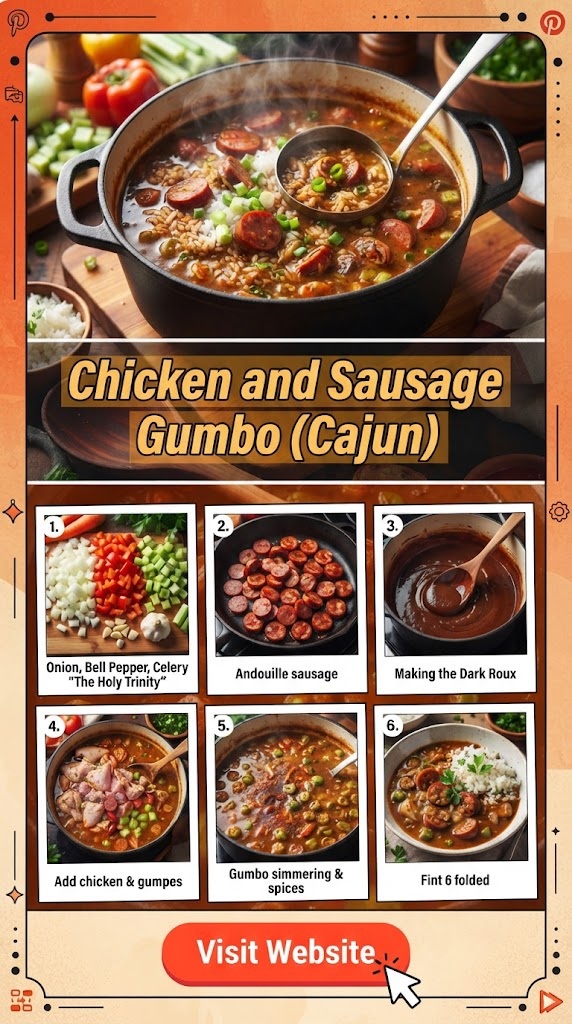
Chicken and Sausage Gumbo (Cajun)
Chicken and Sausage Gumbo (Cajun) — A Rich, Hearty Southern Classic
Chicken and sausage gumbo is one of those comforting dishes that turns simple ingredients into something deeply flavorful. This Cajun-inspired gumbo combines tender chicken, smoky andouille sausage, aromatic vegetables, bold Cajun seasoning, and a dark, savory roux in a rich broth. Served over steamed white rice, it makes a satisfying meal for family dinners, weekend gatherings, game days, and cold-weather nights.
The secret to excellent gumbo is patience. The vegetables need time to soften, the sausage needs to release its smoky flavor, and most importantly, the roux needs to develop a deep brown color without burning. Once everything comes together, the result is a thick, flavorful stew with layers of savory, smoky, spicy, and slightly sweet flavors.
Why You’ll Love This Chicken and Sausage Gumbo
There are plenty of reasons to keep this recipe in your regular dinner rotation.
First, it is incredibly flavorful. The combination of a deeply browned roux, Cajun seasoning, onions, celery, bell peppers, chicken, and sausage creates a flavor that tastes much more complicated than the ingredient list suggests.
Second, it is filling. Tender chicken and sausage make the gumbo hearty enough to serve as a complete meal, especially when paired with fluffy white rice.
Third, it is excellent for leftovers. Gumbo often tastes even better the next day because the flavors have more time to blend.
Finally, it is flexible. You can adjust the spice level, change the type of sausage, add more vegetables, or use chicken thighs instead of chicken breast depending on your preference.
Complete Chicken and Sausage Gumbo Recipe
Recipe Overview
Prep Time: 25 minutes
Cook Time: 1 hour 30 minutes
Total Time: About 2 hours
Servings: 8
Cuisine: Cajun-inspired Southern
Course: Main Course
Difficulty: Medium
Ingredients
For the Chicken and Sausage Gumbo
Protein
- 1 ½ pounds boneless, skinless chicken thighs
- 12 ounces smoked andouille sausage
- 1 tablespoon cooking oil
Chicken thighs are especially good for gumbo because they stay tender during the longer cooking process. You can substitute boneless chicken breast, but be careful not to overcook it.
Andouille sausage gives the gumbo its characteristic smoky, savory flavor. If andouille is unavailable, use another good-quality smoked sausage.
For the Roux
- ½ cup all-purpose flour
- ½ cup vegetable oil
The roux is one of the most important parts of gumbo. It thickens the broth while creating a deep roasted flavor.
The Holy Trinity
- 1 large yellow onion, finely diced
- 1 large green bell pepper, diced
- 3 celery stalks, finely diced
This combination of onion, bell pepper, and celery forms the aromatic foundation of many Cajun dishes.
Garlic and Seasoning
- 5 cloves garlic, minced
- 2 teaspoons Cajun seasoning
- 1 teaspoon smoked paprika
- 1 teaspoon dried thyme
- ½ teaspoon dried oregano
- 2 bay leaves
- ½ teaspoon black pepper
- ¼ teaspoon cayenne pepper, optional
- Salt, to taste
Cajun seasoning can vary significantly in saltiness and heat, so it is best to taste the gumbo before adding additional salt.
For the Broth
- 6 cups chicken broth
- 1 cup water, if needed
- 1 tablespoon Worcestershire sauce
- 1 tablespoon tomato paste, optional
- 1 tablespoon hot sauce, optional
Traditional gumbo recipes vary considerably. Tomato is more common in some Creole versions than in many Cajun versions, so it can be left out if you want a more traditional Cajun-style profile.
Optional
- ½ cup sliced green onions
- ¼ cup fresh parsley, chopped
- Hot sauce for serving
- Cooked white rice for serving
Ingredients Form
For easy preparation, organize everything before you begin cooking.
| Ingredient | Amount |
|---|---|
| Boneless chicken thighs | 1 ½ pounds |
| Andouille sausage | 12 ounces |
| Vegetable oil | ½ cup + 1 tablespoon |
| All-purpose flour | ½ cup |
| Yellow onion | 1 large |
| Green bell pepper | 1 large |
| Celery | 3 stalks |
| Garlic | 5 cloves |
| Chicken broth | 6 cups |
| Cajun seasoning | 2 teaspoons |
| Smoked paprika | 1 teaspoon |
| Dried thyme | 1 teaspoon |
| Dried oregano | ½ teaspoon |
| Bay leaves | 2 |
| Black pepper | ½ teaspoon |
| Cayenne | ¼ teaspoon, optional |
| Worcestershire sauce | 1 tablespoon |
| Tomato paste | 1 tablespoon, optional |
| Hot sauce | 1 tablespoon, optional |
| Green onions | ½ cup |
| Fresh parsley | ¼ cup |
| Cooked white rice | For serving |
How to Cook Chicken and Sausage Gumbo
Step 1: Prepare the Ingredients
Before turning on the stove, prepare all your ingredients.
Cut the chicken into bite-sized pieces. Slice the sausage into rounds or half-moons. Dice the onion, bell pepper, and celery into small, relatively uniform pieces.
Mince the garlic and measure your seasonings.
This preparation is particularly important when making the roux because once the flour and oil begin cooking, you need to stay close to the pot.
Step 2: Brown the Chicken
Heat 1 tablespoon of oil in a large heavy-bottomed Dutch oven or soup pot over medium-high heat.
Season the chicken lightly with Cajun seasoning and black pepper.
Add the chicken to the hot oil in a single layer. Cook for approximately 3–4 minutes per side, or until the pieces develop a golden-brown exterior.
The chicken does not need to be completely cooked through at this stage.
Remove the chicken and place it on a plate.
The browned bits left on the bottom of the pot are valuable. They will contribute additional flavor to the gumbo.
Step 3: Brown the Sausage
Add the sliced sausage to the same pot.
Cook for approximately 3–5 minutes, stirring occasionally, until the sausage develops browned edges.
Remove the sausage and set it aside with the chicken.
Do not clean the pot.
Those browned bits are exactly what you want.
Step 4: Make the Roux
This is the most important step in the recipe.
Add ½ cup vegetable oil to the pot over medium heat.
Gradually whisk in ½ cup all-purpose flour.
Immediately begin stirring with a wooden spoon or heat-resistant whisk.
The mixture should look smooth and thick.
Continue cooking and stirring.
At first, the roux will be pale, similar to the color of cream. As it cooks, it will gradually become tan, then light brown, then darker brown.
For a flavorful gumbo, aim for a deep brown or milk-chocolate color.
This can take approximately 20–35 minutes depending on your heat level and cookware.
Do Not Walk Away
A roux can go from perfectly browned to burned very quickly.
Stir constantly or very frequently.
If you see black specks or smell a sharp burnt odor, the roux has likely burned and should be discarded and restarted.
A burned roux will make the entire gumbo taste bitter.
Low to medium heat is much safer than trying to rush the process.
Step 5: Add the Holy Trinity
Once the roux reaches a rich brown color, immediately add the diced onion, bell pepper, and celery.
Be careful because the mixture may bubble vigorously.
Stir continuously for the first minute.
Cook the vegetables for approximately 7–10 minutes, stirring regularly.
The vegetables will soften and become coated in the flavorful roux.
This stage also helps cool the roux slightly and prevents it from continuing to brown too aggressively.
Step 6: Add the Garlic and Seasonings
Add the minced garlic.
Stir for approximately 30–60 seconds.
Then add:
- Cajun seasoning
- Smoked paprika
- Thyme
- Oregano
- Black pepper
- Cayenne pepper, if using
Stir everything together.
Cook for another minute.
Be careful not to burn the garlic.
Step 7: Add the Chicken Broth Slowly
Gradually pour in the chicken broth while stirring constantly.
Adding the liquid slowly helps prevent lumps from forming in the roux.
Keep stirring until the roux is completely incorporated into the broth.
The mixture should begin to resemble a thick, rich soup.
Add Worcestershire sauce and tomato paste if using.
Stir well.
Step 8: Return the Chicken and Sausage
Add the browned chicken and sausage back into the pot.
Add the bay leaves.
Bring the gumbo to a gentle boil.
Once it begins bubbling, reduce the heat to low.
Step 9: Simmer the Gumbo
Cover the pot partially and simmer gently for approximately 45–60 minutes.
Stir every 10–15 minutes.
The chicken will become tender and the flavors will gradually deepen.
Avoid aggressive boiling.
A gentle simmer is ideal.
If the gumbo becomes thicker than you prefer, add a little water or additional chicken broth.
Step 10: Taste and Adjust
After approximately 45 minutes, taste the gumbo.
Adjust the seasoning according to your preference.
You may want to add:
- More Cajun seasoning
- More black pepper
- A little salt
- More cayenne
- Hot sauce
- Additional Worcestershire sauce
Remember that sausage and Cajun seasoning can already contain substantial salt, so taste before adding more.
Remove the bay leaves before serving.
Step 11: Finish the Gumbo
Stir in chopped fresh parsley and sliced green onions.
Allow the gumbo to rest for about 5–10 minutes before serving.
This short resting period allows the flavors to settle and gives the gumbo a more cohesive texture.
Step 12: Serve With Rice
Spoon fluffy cooked white rice into bowls.
Ladle the hot chicken and sausage gumbo over or beside the rice.
Finish with sliced green onions, fresh parsley, and a few drops of hot sauce if desired.
Serve immediately.
What Makes a Great Gumbo Roux?
The roux is arguably the defining component of this recipe.
A roux consists simply of flour and fat, but cooking it to the proper color transforms its flavor.
A light roux has a mild, buttery character and stronger thickening ability.
A darker roux has a deeper toasted flavor and gives gumbo its characteristic color, but it provides slightly less thickening power.
For chicken and sausage gumbo, a medium-dark to dark brown roux is ideal.
The goal is not simply to make the gumbo brown. The goal is to develop a roasted, nutty flavor without burning the flour.
How to Avoid Burning the Roux
Keep the heat moderate.
Stir frequently.
Use a heavy-bottomed pot that distributes heat evenly.
Do not leave the kitchen while making the roux.
If the roux begins darkening too quickly, reduce the heat.
The color should develop gradually.
If you notice black flecks, stop. Burned flour will create an unpleasant bitterness that cannot easily be corrected.
It is much better to spend an extra 10 minutes making a beautiful roux than to rush the process.
Choosing the Best Chicken
Chicken thighs are my preferred choice for this gumbo because they are flavorful and forgiving.
Boneless thighs are convenient because there are no bones to remove later.
Bone-in chicken thighs can also be used and can add even more flavor to the broth. Simply allow additional cooking time and remove the bones before serving if desired.
Chicken breast works as well, particularly if you prefer leaner meat. However, breast meat can become dry if simmered too aggressively or for too long.
If using chicken breast, cut it into larger pieces and avoid prolonged boiling.
Choosing the Sausage
Andouille sausage is the classic choice for Cajun-style gumbo.
It provides:
- Smokiness
- Garlic flavor
- Savory richness
- Mild to moderate spice
- Firm texture
If you cannot find andouille, smoked sausage can be substituted.
Avoid very mild sausages if you want the characteristic flavor of gumbo.
You can also combine smoked sausage with a small amount of spicy sausage for additional heat.
Can You Make Gumbo Ahead of Time?
Absolutely.
Gumbo is an excellent make-ahead meal.
In fact, many people find that the flavor improves after resting overnight.
To prepare ahead:
- Cook the gumbo completely.
- Allow it to cool.
- Transfer it to an airtight container.
- Refrigerate promptly.
- Reheat gently when ready to serve.
Keep the rice separate.
When reheating, warm the gumbo slowly over medium-low heat.
Add a small amount of broth or water if it has thickened considerably in the refrigerator.
How to Store Leftover Gumbo
Allow leftover gumbo to cool reasonably quickly and transfer it to airtight containers.
Refrigerate promptly.
For best quality, use refrigerated leftovers within several days.
For longer storage, gumbo can also be frozen in freezer-safe containers.
Leave some space at the top of the container because liquids expand as they freeze.
Thaw frozen gumbo in the refrigerator before reheating when possible.
Rice is generally best cooked separately rather than frozen directly inside the gumbo.
How to Reheat Gumbo
Place the gumbo in a saucepan over medium-low heat.
Stir occasionally.
If it is extremely thick, add a splash of chicken broth or water.
Heat until steaming hot throughout.
Avoid very high heat because the thick roux-based mixture can scorch on the bottom.
If reheating a large quantity, use a heavy pot and stir frequently.
Tips for Perfect Chicken and Sausage Gumbo
1. Do Not Rush the Roux
The roux creates the foundation of the dish. Give it time.
2. Brown Your Meat
Browning the chicken and sausage adds additional layers of flavor.
3. Use Fresh Aromatics
Fresh onion, celery, bell pepper, and garlic make a major difference.
4. Taste Before Adding Salt
Sausage and Cajun seasoning can contain plenty of salt.
5. Simmer Gently
A gentle simmer produces tender chicken and allows the flavors to blend.
6. Keep the Rice Separate
This makes leftovers easier to store and prevents the rice from absorbing too much broth.
7. Adjust the Heat
Not everyone enjoys extremely spicy gumbo. Start moderately and add hot sauce at the table.
Common Mistakes to Avoid
Burning the Roux
This is the biggest mistake.
Never leave the roux unattended.
Adding Broth Too Quickly
Pouring all the broth into the roux at once can create lumps.
Add it gradually while stirring.
Overcooking Chicken Breast
If using breast meat, avoid cooking it for excessively long periods.
Making the Gumbo Too Salty
Season gradually.
The sausage and broth may already contain salt.
Boiling Too Hard
Gumbo should simmer rather than aggressively boil.
Using Too Much Flour
A heavy roux can make the gumbo excessively thick.
Stick to the recommended flour-to-fat ratio.
Optional Gumbo Variations
Spicy Chicken and Sausage Gumbo
Add extra cayenne pepper and a few tablespoons of hot sauce.
You can also use a spicier andouille sausage.
Vegetable-Loaded Gumbo
Add chopped okra, additional bell peppers, or mushrooms.
Chicken Breast Gumbo
Replace the chicken thighs with boneless chicken breast.
Monitor the cooking time carefully.
Seafood Gumbo
Add shrimp, crab, or other seafood toward the end of cooking.
Seafood cooks much faster than chicken and should not be simmered for the entire cooking period.
Okra Gumbo
Add sliced okra during the simmering stage.
Okra contributes body and a distinctive Southern flavor.
What to Serve With Chicken and Sausage Gumbo
Gumbo is traditionally hearty enough to serve with rice alone, but side dishes can turn it into a larger meal.
Consider serving it with:
- Cornbread
- Crusty French bread
- Green salad
- Collard greens
- Roasted vegetables
- Steamed green beans
- Pickled vegetables
- Simple cucumber salad
Cornbread is particularly delicious because it can soak up the flavorful gumbo broth.
Frequently Asked Questions
Can I use chicken breast instead of thighs?
Yes. Chicken breast works well, but it can dry out more easily. Cut it into larger pieces and avoid prolonged high-heat cooking.
Can I make gumbo without andouille sausage?
Yes. Substitute another smoked sausage. The flavor will be slightly different, but the dish will still be delicious.
Does gumbo have to contain okra?
No. There are many styles of gumbo, and okra is not required for this chicken and sausage version.
Why is my gumbo too thick?
Add additional chicken broth or water gradually until you reach the consistency you prefer.
Why is my gumbo too thin?
Allow it to simmer uncovered for several additional minutes so some liquid can evaporate.
Can I make the roux with butter?
You can, although oil is often preferred for a dark roux because butter can burn more easily at the temperatures required for prolonged browning.
Can I make gumbo in a slow cooker?
Yes, but the roux should still be prepared separately on the stovetop. Once the roux and aromatic vegetables are prepared, they can be transferred to a slow cooker with the remaining ingredients.
Nutrition Notes
Exact nutrition depends on the sausage, chicken, broth, oil, serving size, and amount of rice used.
A typical serving provides a substantial amount of protein from chicken and sausage. The rice contributes carbohydrates, while the vegetables add fiber and micronutrients.
For a lighter version, use more chicken and vegetables, reduce the sausage slightly, and serve the gumbo with a smaller portion of rice.
Remember that sodium can vary significantly depending on the sausage, broth, and Cajun seasoning selected.
Complete Cooking Timeline
For easier preparation, here is the entire process at a glance:
0:00–0:15 — Prep ingredients
Dice vegetables, cut chicken, slice sausage, mince garlic, and measure seasonings.
0:15–0:25 — Brown chicken
Cook chicken until nicely browned, then remove.
0:25–0:30 — Brown sausage
Cook sausage until golden around the edges.
0:30–1:00 — Make roux
Combine flour and oil and slowly cook until deep brown.
1:00–1:10 — Cook vegetables
Add onion, celery, and bell pepper.
1:10–1:15 — Add garlic and seasoning
Cook briefly.
1:15–1:20 — Add broth
Gradually whisk in broth.
1:20–2:05 — Simmer
Return chicken and sausage and simmer gently.
2:05–2:10 — Finish
Taste, adjust seasoning, add parsley and green onions.
2:10 — Serve
Spoon over cooked rice and enjoy.
Final Thoughts
Chicken and sausage gumbo is the kind of meal that rewards patience. The ingredient list is straightforward, but the cooking process creates remarkable depth of flavor.
The most important part is the roux. Take your time and cook it slowly until it becomes richly brown and aromatic. From there, the onion, celery, and bell pepper create the savory foundation, while smoked sausage and chicken provide hearty texture and flavor.
Once everything simmers together, the broth becomes rich, savory, smoky, and wonderfully satisfying.
Serve the gumbo with fluffy white rice, fresh green onions, parsley, and your favorite hot sauce. Add a piece of warm cornbread on the side, and you have a comforting Cajun-inspired dinner that is perfect for sharing.
Recipe Tip: If you’re making this for guests, prepare the gumbo a day ahead whenever possible. The flavors have more time to blend, and the meal becomes even easier to serve.