
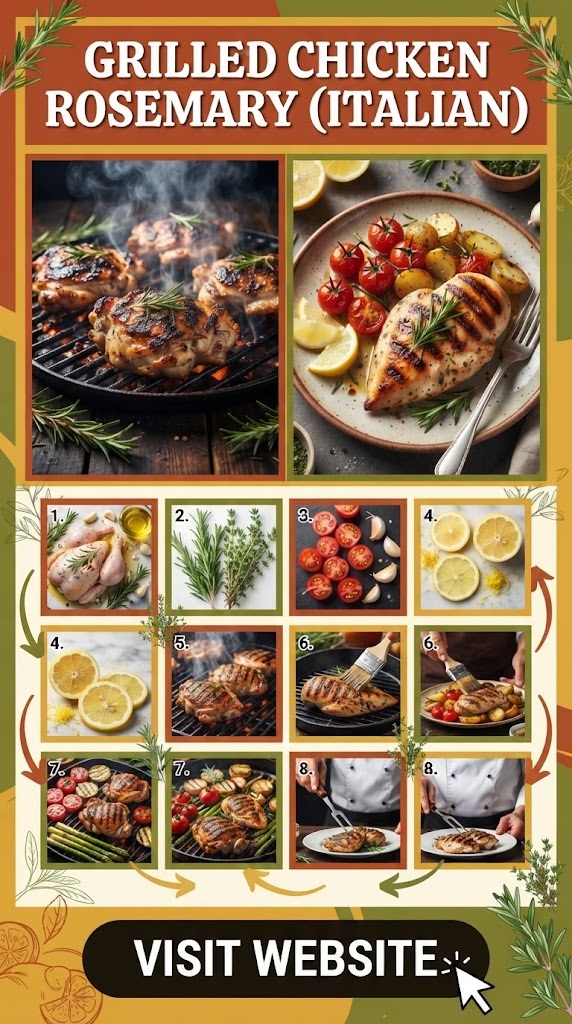
Grilled Chicken Rosemary (Italian)
Grilled Chicken Rosemary (Italian) — Juicy, Herb-Filled Italian-Style Recipe
Grilled Chicken Rosemary is a simple Italian-inspired dish that turns everyday chicken into a flavorful, juicy, and aromatic meal. Fresh rosemary, garlic, lemon, extra-virgin olive oil, and a few basic seasonings create a marinade that deeply flavors the chicken while helping it stay tender on the grill.
This recipe is perfect for a weeknight dinner, weekend barbecue, family gathering, or summer cookout. The combination of smoky grilled chicken and fragrant rosemary gives the dish a rustic Mediterranean character without requiring complicated ingredients.
Grilled Chicken Rosemary Recipe at a Glance
Prep Time: 15 minutes
Marinating Time: 30 minutes to 4 hours
Cook Time: 15–20 minutes
Total Time: About 1 hour
Servings: 4
Cuisine: Italian-inspired / Mediterranean
Cooking Method: Outdoor grill or grill pan
Difficulty: Easy
Why You’ll Love This Recipe
- Juicy and tender grilled chicken
- Fresh rosemary gives it an unmistakable Italian aroma
- Garlic and lemon add brightness
- Simple pantry-friendly ingredients
- Excellent for meal prep
- Works with chicken breasts or thighs
- Easy enough for a weeknight dinner
- Delicious hot, warm, or cold
- Pairs with vegetables, potatoes, pasta, salad, or bread
- Naturally high in protein
Ingredients
For the Chicken
- 4 boneless, skinless chicken breasts, about 6–8 ounces each
- 2 tablespoons extra-virgin olive oil
- 2 tablespoons fresh rosemary, finely chopped
- 4 garlic cloves, finely minced
- 1 tablespoon fresh lemon juice
- 1 teaspoon finely grated lemon zest
- 1 teaspoon Italian seasoning
- 1 teaspoon kosher salt
- ½ teaspoon freshly ground black pepper
- ½ teaspoon onion powder
- ¼ teaspoon red pepper flakes, optional
- 1 tablespoon chopped fresh parsley, optional
- 1 tablespoon grated Parmesan, optional for serving
For the Lemon-Rosemary Finishing Oil
- 2 tablespoons extra-virgin olive oil
- 1 tablespoon fresh lemon juice
- 1 teaspoon chopped fresh rosemary
- 1 small garlic clove, finely minced
- Pinch of salt
- Pinch of black pepper
Optional Garnishes
- Fresh rosemary sprigs
- Fresh parsley
- Lemon wedges
- Lemon slices
- Shaved Parmesan
- Cracked black pepper
- Extra-virgin olive oil
Choosing the Best Chicken
The chicken you choose can make a significant difference in the final result.
Chicken Breasts
Chicken breasts are lean, mild, and excellent for grilling. However, they can become dry if they are overcooked.
For the most consistent results, choose chicken breasts that are similar in size and thickness.
Chicken Thighs
Boneless, skinless chicken thighs are more forgiving because they contain more fat. They remain juicy even if they stay on the grill slightly longer.
If you prefer especially tender grilled chicken, thighs are an excellent choice.
Bone-In Chicken
You can also make this recipe with bone-in chicken pieces. They require more cooking time, so use internal temperature rather than time alone to determine doneness.
Why Rosemary Works So Well With Chicken
Rosemary is one of the classic herbs associated with Italian and Mediterranean cooking.
Its woody, pine-like aroma pairs beautifully with poultry. When combined with garlic and olive oil, rosemary creates a savory marinade that smells incredible while the chicken cooks.
Fresh rosemary is particularly good for grilling because it holds up well to heat.
If you only have dried rosemary, you can substitute approximately 1 teaspoon dried rosemary for every tablespoon of fresh rosemary. Crush the dried rosemary slightly between your fingers before adding it to the marinade.
Preparing the Chicken
Before making the marinade, prepare the chicken properly.
If the chicken breasts are very thick, place each breast between two sheets of plastic wrap or parchment paper.
Using the flat side of a meat mallet, gently pound the chicken until it reaches a relatively even thickness.
You do not need to make it extremely thin.
The goal is simply to create an even piece of meat so that the thinner end does not become dry while the thickest part is still cooking.
Aim for approximately ¾-inch thickness when possible.
Pat the chicken dry with paper towels.
Dry chicken surfaces brown and grill better than chicken covered with excess moisture.
Making the Rosemary Marinade
Add the following ingredients to a bowl:
- Olive oil
- Chopped fresh rosemary
- Minced garlic
- Lemon juice
- Lemon zest
- Italian seasoning
- Salt
- Black pepper
- Onion powder
- Red pepper flakes, if using
Whisk everything together until well combined.
The olive oil carries the flavors of the herbs and garlic across the surface of the chicken.
The lemon adds acidity and freshness.
The rosemary provides the main herbal character.
Garlic contributes a deep savory flavor.
Salt enhances all of these ingredients while helping season the chicken.
How to Marinate the Chicken
Place the chicken in a large resealable bag, shallow baking dish, or covered container.
Pour the rosemary marinade over the chicken.
Turn the chicken several times so that every surface is coated.
Cover and refrigerate.
For the best balance of flavor and texture, marinate the chicken for 30 minutes to 4 hours.
You can marinate it for longer, but because the marinade contains lemon juice, very long marination is not necessary.
The surface of the chicken can eventually become unpleasantly soft if exposed to acidic marinades for too long.
For convenience, you can prepare the chicken in the morning and grill it later the same day.
Preparing the Grill
Preheat your grill to medium-high heat.
You want the cooking surface hot enough to create attractive grill marks and browning without burning the garlic or rosemary.
If using a gas grill, preheat for approximately 10–15 minutes.
If using charcoal, allow the coals to become hot and develop a light ash coating before cooking.
Clean the grill grates with a grill brush.
Then lightly oil the grates using a high-heat cooking oil.
Do not pour oil directly onto an open flame.
Grilling the Rosemary Chicken
Remove the chicken from the refrigerator about 15–20 minutes before grilling if practical.
Take the chicken out of the marinade and allow excess marinade to drip off.
Do not pour used marinade over cooked chicken unless you boil it thoroughly first.
Place the chicken directly on the hot grill.
Close the lid.
Cook for approximately 5–7 minutes on the first side, depending on thickness.
Avoid repeatedly moving the chicken.
Let it cook long enough to develop a good sear.
After the first side has browned, turn the chicken over.
Continue grilling for another 5–7 minutes, or until the chicken reaches a safe internal temperature.
The exact cooking time depends on:
- Chicken thickness
- Grill temperature
- Type of chicken
- Outdoor temperature
- Whether the grill lid is open or closed
Therefore, a thermometer is more reliable than a timer.
The Most Important Step: Check the Temperature
Chicken should reach an internal temperature of 165°F (74°C) in the thickest part.
Insert an instant-read thermometer horizontally into the thickest section of the chicken.
Make sure the thermometer is not touching the grill, bone, or a particularly thin portion of the meat.
Once the chicken reaches the safe temperature, remove it from the grill.
Do not continue cooking unnecessarily.
Overcooking is one of the most common reasons grilled chicken becomes dry.
Resting the Chicken
Transfer the cooked chicken to a clean plate or cutting board.
Allow it to rest for approximately 5 minutes before slicing.
Resting gives the juices time to redistribute throughout the meat.
If you cut the chicken immediately after removing it from the grill, more of the juices can run onto the cutting board.
A short resting period helps keep the chicken moist.
Making the Lemon-Rosemary Finishing Oil
While the chicken rests, make a quick finishing mixture.
Combine:
- 2 tablespoons olive oil
- 1 tablespoon lemon juice
- 1 teaspoon chopped rosemary
- 1 finely minced garlic clove
- A pinch of salt
- A pinch of black pepper
Whisk thoroughly.
Drizzle a small amount over the grilled chicken immediately before serving.
This finishing oil adds fresh rosemary and lemon flavor that contrasts beautifully with the smoky grilled exterior.
How to Serve Grilled Chicken Rosemary
There are many ways to serve this chicken.
With Roasted Potatoes
Italian-style roasted potatoes are an excellent pairing.
Toss baby potatoes with olive oil, garlic, rosemary, salt, and pepper.
Roast until golden and crispy.
Serve them alongside the chicken with lemon wedges.
With a Green Salad
For a lighter meal, serve the chicken with a simple salad made with:
- Romaine lettuce
- Arugula
- Cherry tomatoes
- Cucumber
- Red onion
- Olive oil
- Lemon juice
- Salt
- Black pepper
The freshness of the salad balances the richness of the grilled chicken.
With Grilled Vegetables
Put vegetables on the grill while cooking the chicken.
Good choices include:
- Zucchini
- Bell peppers
- Eggplant
- Asparagus
- Mushrooms
- Red onions
Brush them lightly with olive oil and season with salt and pepper.
With Pasta
Slice the chicken and serve it over pasta tossed with olive oil, garlic, Parmesan, parsley, and lemon.
This creates a simple Italian-inspired dinner.
With Crusty Bread
A rustic loaf of Italian bread is perfect for soaking up the lemon-rosemary juices.
A Simple Italian Dinner Plate
For a complete meal, serve:
Main: Grilled Rosemary Chicken
Side: Garlic roasted potatoes
Vegetable: Grilled zucchini and peppers
Salad: Arugula and tomato salad
Bread: Warm crusty Italian bread
Garnish: Lemon wedges and fresh rosemary
This combination makes a beautiful dinner for family or guests.
Tips for Juicy Grilled Chicken
1. Pound Thick Chicken Breasts Evenly
Uneven chicken cooks unevenly.
The thin portion may become dry while the thick portion is still undercooked.
Even thickness solves much of this problem.
2. Don’t Skip the Oil
Olive oil helps carry the flavors of rosemary and garlic while also helping the chicken brown.
3. Use Fresh Rosemary
Fresh rosemary provides a brighter and more aromatic flavor.
Dried rosemary works, but fresh is preferred for this recipe.
4. Don’t Over-Marinate
Because lemon juice is acidic, several hours is generally enough.
5. Preheat the Grill
Starting chicken on a cold grill can cause sticking and poor browning.
A properly heated grill creates better caramelization.
6. Don’t Constantly Flip the Chicken
Let the chicken cook undisturbed long enough to brown.
One or two turns are usually sufficient.
7. Use a Thermometer
Cooking time is only an estimate.
Chicken thickness and grill temperature vary.
An instant-read thermometer provides a much more dependable indication of doneness.
8. Rest Before Cutting
Give the chicken several minutes to rest.
This simple step can make a noticeable difference in texture.
How to Prevent Rosemary and Garlic From Burning
Fresh garlic and rosemary can burn when exposed directly to very high heat.
A little browning is delicious, but blackened garlic can taste bitter.
To reduce the risk:
- Shake off excess marinade before placing chicken on the grill.
- Avoid extremely high heat.
- Use medium-high rather than maximum heat.
- Turn the chicken when necessary.
- Add fresh rosemary finishing oil after cooking rather than putting large amounts of fresh herbs directly onto the grill.
This gives you the rosemary flavor without excessive burning.
Grilled Chicken Rosemary With Chicken Thighs
If using boneless, skinless chicken thighs, the method is almost identical.
Use approximately 6–8 chicken thighs for four servings, depending on size.
Marinate them in the same rosemary mixture.
Preheat the grill to medium-high.
Grill for approximately 5–7 minutes per side, adjusting according to thickness.
Check the internal temperature.
Chicken thighs are safe at 165°F (74°C), but many cooks prefer thighs cooked somewhat higher because additional cooking can make the connective tissue more tender.
Again, temperature and texture matter more than a fixed cooking time.
Grilled Rosemary Chicken With Lemon
For an especially bright version, increase the lemon flavor.
Add:
- 1 extra teaspoon lemon zest to the marinade
- Extra lemon wedges for serving
- A small splash of fresh lemon juice over the chicken after grilling
Do not add excessive lemon juice to the marinade simply to make it more lemony.
Fresh lemon added after cooking gives you a brighter flavor.
Creamy Rosemary Chicken Variation
If you want to transform the grilled chicken into a richer dinner, make a quick creamy sauce.
Heat a skillet over medium heat.
Add a little olive oil or butter.
Add minced garlic and cook briefly.
Pour in a small amount of chicken broth and heavy cream.
Add chopped rosemary, black pepper, and Parmesan.
Simmer gently until slightly thickened.
Slice the grilled chicken and spoon the sauce over the top.
Serve with pasta, mashed potatoes, or roasted vegetables.
Mediterranean Variation
For a Mediterranean-style plate, serve the grilled chicken with:
- Hummus
- Cucumber
- Tomatoes
- Olives
- Red onion
- Warm pita
- Tzatziki
- Fresh parsley
Although this moves away from strictly Italian flavors, rosemary, lemon, garlic, and olive oil work beautifully with Mediterranean ingredients.
Italian Herb Variation
You can make the marinade more herb-forward by adding:
- Fresh basil
- Fresh parsley
- Oregano
- Thyme
A good combination is:
- 1 tablespoon rosemary
- 1 tablespoon parsley
- 1 teaspoon oregano
- ½ teaspoon thyme
Do not overwhelm the chicken with too many herbs.
Rosemary should remain one of the dominant flavors.
How to Make This Recipe on a Grill Pan
If you don’t have an outdoor grill, use a heavy grill pan.
Place the grill pan over medium-high heat.
Allow it to become hot before adding the chicken.
Lightly oil the pan.
Place the marinated chicken in the pan.
Cook for approximately 5–7 minutes on the first side.
Turn the chicken and continue cooking.
Use a thermometer to confirm that the thickest part reaches 165°F (74°C).
If the chicken is browning too quickly while the center remains undercooked, reduce the heat and continue cooking gently.
Oven and Grill Combination Method
For very thick chicken breasts, you can use a two-stage method.
First, grill the chicken over medium-high heat to develop grill marks.
Then move it to a cooler part of the grill and close the lid.
Continue cooking until the center reaches 165°F (74°C).
This indirect-heat method is particularly useful for thick pieces.
Make-Ahead Instructions
This recipe is excellent for meal preparation.
You can prepare the marinade several hours in advance.
Store it covered in the refrigerator.
You can also marinate the chicken earlier in the day.
After grilling, allow the chicken to cool before storing it.
Place the chicken in an airtight container.
Refrigerate promptly.
For best quality, use refrigerated cooked chicken within several days and reheat it thoroughly.
How to Reheat Grilled Chicken
The microwave is convenient but can easily overcook chicken.
For better results, slice the chicken and place it in a covered skillet with a tablespoon or two of water or chicken broth.
Heat gently over medium-low heat until warmed through.
You can also reheat the chicken in a covered oven-safe dish.
Avoid prolonged high heat because it can dry the meat.
How to Store Leftovers
Allow cooked chicken to cool appropriately and place it in an airtight container.
Keep it refrigerated.
You can use leftovers in:
- Salads
- Wraps
- Sandwiches
- Pasta
- Rice bowls
- Quesadillas
- Grain bowls
- Soup
- Pizza
- Meal-prep containers
Cold sliced rosemary chicken is especially good in a salad with tomatoes, cucumber, Parmesan, and lemon vinaigrette.
Freezing Grilled Rosemary Chicken
Cooked grilled chicken can also be frozen.
Slice the chicken before freezing if you plan to use it for quick meals.
Place portions in freezer-safe containers or bags.
Remove as much excess air as possible.
Label the container with the date.
Thaw safely in the refrigerator before reheating.
For best texture, avoid repeatedly freezing and thawing the same portion.
Common Mistakes to Avoid
Cooking Straight From an Ice-Cold Refrigerator
Extremely cold chicken can cook less evenly.
Allowing it a short time to lose some of its refrigerator chill can help, while still following safe food-handling practices.
Using Too Much Lemon Juice
Acid is useful in a marinade, but excessive acid can affect the texture.
Use enough for flavor without turning the marinade into a highly acidic bath.
Grilling Over Excessively High Heat
Very high heat can burn the outside before the center cooks.
Medium-high heat is usually ideal.
Pressing Down on the Chicken
Avoid repeatedly pressing the chicken with a spatula.
You can force flavorful juices out of the meat.
Cutting Too Soon
Rest the chicken before slicing.
Guessing Doneness by Color Alone
Chicken can appear white before it has reached a safe internal temperature, while grilled meat can have darker areas from browning.
Use a food thermometer.
Frequently Asked Questions
Can I use dried rosemary?
Yes. Fresh rosemary is preferred, but dried rosemary works well.
Use approximately 1 teaspoon dried rosemary in place of 1 tablespoon fresh rosemary.
Crush it slightly before adding it to the marinade.
Can I use chicken thighs?
Absolutely.
Boneless, skinless chicken thighs are especially juicy and forgiving on the grill.
Can I marinate the chicken overnight?
Because this marinade contains lemon juice, I recommend keeping the marination period moderate rather than leaving it for an excessively long time.
For most situations, 30 minutes to 4 hours provides plenty of flavor.
Can I use bottled lemon juice?
Fresh lemon juice is strongly recommended because it has a brighter flavor.
Bottled lemon juice can work when fresh lemons aren’t available.
Can I make this without garlic?
Yes.
The chicken will still taste good with rosemary, olive oil, lemon, salt, and pepper.
Can I use dried Italian seasoning?
Yes.
Italian seasoning makes the recipe even easier.
You can also create your own combination using oregano, basil, thyme, and rosemary.
What is the best chicken cut for this recipe?
Boneless chicken breasts provide a lean, classic grilled chicken result.
Boneless chicken thighs provide a juicier and more forgiving result.
Nutrition Information
Approximate nutrition per serving will vary depending on the chicken size and exact amount of olive oil used.
A serving primarily provides:
- High-quality protein
- Moderate fat
- Very low carbohydrates
- Vitamin B6
- Niacin
- Selenium
- Phosphorus
The nutritional profile can change significantly depending on whether you serve the chicken with potatoes, pasta, bread, creamy sauces, or other sides.
Complete Step-by-Step Recipe
Step 1: Prepare the Chicken
Pat 4 chicken breasts dry.
If they are very thick, gently pound them to an even thickness.
Step 2: Make the Marinade
Whisk together olive oil, fresh rosemary, garlic, lemon juice, lemon zest, Italian seasoning, salt, black pepper, onion powder, and optional red pepper flakes.
Step 3: Coat the Chicken
Place chicken into a shallow dish or resealable bag.
Pour the marinade over the chicken.
Turn to coat completely.
Step 4: Marinate
Cover and refrigerate for 30 minutes to 4 hours.
Step 5: Preheat the Grill
Heat the grill to medium-high.
Clean and lightly oil the grates.
Step 6: Start Grilling
Remove the chicken from the marinade.
Allow excess marinade to drip off.
Place chicken on the grill.
Step 7: Cook the First Side
Grill for approximately 5–7 minutes.
Avoid constantly moving the chicken.
Step 8: Flip
Turn the chicken and grill the second side for another 5–7 minutes, adjusting according to thickness.
Step 9: Check Temperature
Insert an instant-read thermometer into the thickest part.
The chicken should reach 165°F (74°C).
Step 10: Rest
Transfer the chicken to a clean plate.
Rest for approximately 5 minutes.
Step 11: Make Finishing Oil
Mix olive oil, lemon juice, rosemary, garlic, salt, and pepper.
Step 12: Slice
Slice the chicken against the grain.
Step 13: Finish
Drizzle lightly with lemon-rosemary oil.
Garnish with parsley, rosemary, Parmesan, and lemon wedges if desired.
Step 14: Serve
Serve immediately with your favorite Italian or Mediterranean-inspired side dishes.
Recipe Card
Grilled Chicken Rosemary (Italian)
Servings: 4
Ingredients
- 4 boneless, skinless chicken breasts
- 2 tablespoons extra-virgin olive oil
- 2 tablespoons chopped fresh rosemary
- 4 garlic cloves, minced
- 1 tablespoon lemon juice
- 1 teaspoon lemon zest
- 1 teaspoon Italian seasoning
- 1 teaspoon kosher salt
- ½ teaspoon black pepper
- ½ teaspoon onion powder
- ¼ teaspoon red pepper flakes, optional
- 1 tablespoon parsley, optional
Directions
- Pat chicken dry and pound thick breasts to an even thickness.
- Combine olive oil, rosemary, garlic, lemon juice, lemon zest, Italian seasoning, salt, pepper, onion powder, and red pepper flakes.
- Coat chicken thoroughly with the marinade.
- Refrigerate for 30 minutes to 4 hours.
- Preheat grill to medium-high heat.
- Remove chicken from marinade and shake off excess.
- Grill approximately 5–7 minutes per side, depending on thickness.
- Cook until the thickest part reaches 165°F (74°C).
- Remove from grill and rest for 5 minutes.
- Garnish with fresh rosemary, parsley, lemon wedges, and optional Parmesan.
- Serve hot with roasted potatoes, grilled vegetables, salad, pasta, or crusty bread.
Final Thoughts
Grilled Chicken Rosemary is proof that an impressive dinner doesn’t require a long ingredient list. The combination of fresh rosemary, garlic, lemon, olive oil, salt, and black pepper creates layers of flavor while allowing the chicken itself to remain the star of the dish.
The secret is not complicated: prepare the chicken evenly, give it enough time to absorb the marinade, preheat the grill properly, avoid overcooking, and use an instant-read thermometer to confirm that the chicken reaches 165°F (74°C).
For an especially memorable presentation, slice the chicken into thick pieces and arrange it on a platter with lemon wedges, roasted potatoes, grilled vegetables, fresh parsley, and a few rosemary sprigs. Finish with a small drizzle of lemon-rosemary olive oil.
The result is a juicy, smoky, herb-filled chicken dinner with a rustic Italian-inspired character—simple enough for a busy weeknight and attractive enough for a weekend gathering.