
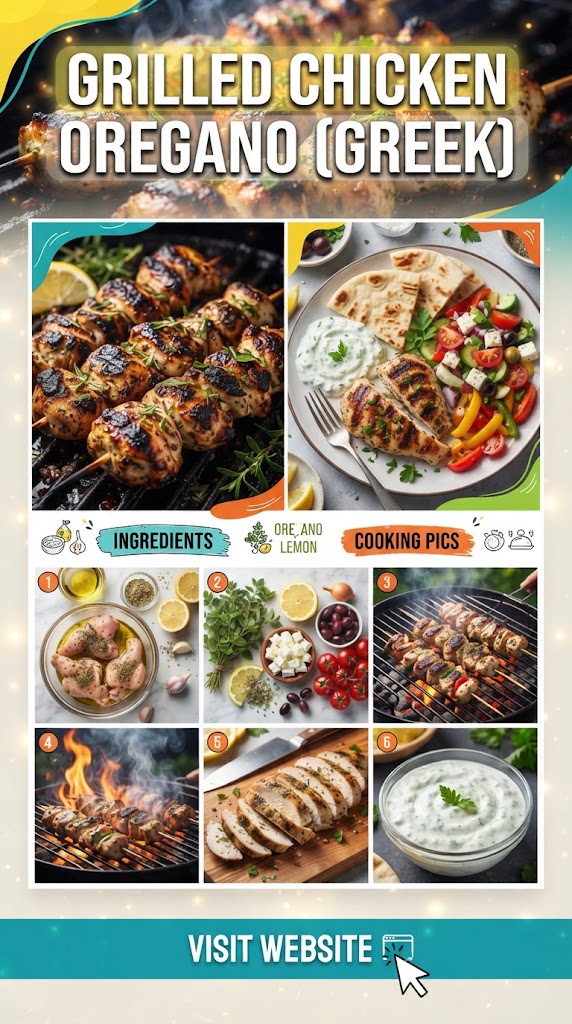
Grilled Chicken Oregano (Greek)
Grilled Chicken Oregano (Greek)
Grilled Chicken Oregano is a simple Greek-inspired chicken recipe built around a few Mediterranean ingredients: fresh lemon, garlic, dried oregano, olive oil, and juicy chicken. The combination creates tender chicken with a bright citrus flavor, fragrant herbs, lightly charred edges, and a savory garlic finish.
This recipe is ideal for weeknight dinners, summer grilling, meal prep, family gatherings, and Mediterranean-style meals. The marinade takes only a few minutes to prepare, yet it gives ordinary chicken a remarkably flavorful result.
Recipe Overview
Recipe Name: Grilled Chicken Oregano (Greek)
Cuisine: Greek / Mediterranean-inspired
Course: Main Course
Prep Time: 15 minutes
Marinating Time: 30 minutes to 4 hours
Cook Time: 12–18 minutes
Total Active Time: About 30 minutes
Servings: 4–6
Difficulty: Easy
Cooking Method: Outdoor grill or grill pan
Why You’ll Love This Greek Grilled Chicken
There are many grilled chicken recipes, but Greek-style oregano chicken has a special balance of flavors. The chicken is not covered in a heavy sauce. Instead, the marinade seasons the meat from the outside while helping it stay moist during grilling.
The most important flavors are:
- Oregano: Provides the classic Greek herbal character.
- Lemon juice: Adds acidity and freshness.
- Olive oil: Carries the herbs and garlic while helping the chicken brown.
- Garlic: Gives the marinade a deep savory aroma.
- Salt: Enhances every other ingredient.
- Black pepper: Adds mild warmth.
- Chicken: Absorbs the Mediterranean flavors and develops delicious grill marks.
The result is chicken that tastes fresh rather than heavy. You can serve it with a Greek salad, roasted potatoes, rice, pita bread, tzatziki, grilled vegetables, or a simple lemon-herb sauce.
Ingredients
For the Chicken
- 2 pounds boneless, skinless chicken breasts or chicken thighs
- 3 tablespoons extra-virgin olive oil
- 3 tablespoons fresh lemon juice
- 1 tablespoon lemon zest
- 4 garlic cloves, finely minced
- 1½ tablespoons dried Greek oregano
- 1 teaspoon kosher salt
- ½ teaspoon freshly ground black pepper
- ½ teaspoon paprika, optional
- ½ teaspoon onion powder, optional
For Garnishing
- 1 tablespoon fresh oregano or chopped parsley
- Lemon wedges
- Extra-virgin olive oil, for drizzling
- A pinch of dried oregano
Optional Serving Ingredients
- Tzatziki sauce
- Warm pita bread
- Greek salad
- Cucumber
- Tomato
- Red onion
- Kalamata olives
- Feta cheese
- Roasted potatoes
- Steamed rice
- Grilled zucchini
- Grilled bell peppers
Choosing the Best Chicken
Both chicken breasts and chicken thighs work beautifully for this recipe.
Chicken Breasts
Chicken breasts are lean, mild, and easy to slice for salads, wraps, and meal prep. Because they contain less fat, however, they can become dry if overcooked.
For evenly cooked breasts, use pieces of similar thickness. If one end is very thick, gently pound it to an even thickness with a meat mallet.
Chicken Thighs
Boneless chicken thighs are particularly forgiving on the grill. Their higher fat content gives them a juicy texture and rich flavor.
They also pair exceptionally well with oregano, garlic, lemon, and olive oil.
Bone-In Chicken
Bone-in chicken can also be used, but cooking times will be longer. If using bone-in pieces, rely on internal temperature rather than cooking time alone.
How to Make the Greek Oregano Marinade
The marinade is the heart of this recipe.
Start with a medium bowl. Add the olive oil, fresh lemon juice, lemon zest, minced garlic, oregano, salt, black pepper, paprika, and onion powder if using.
Whisk everything together until evenly combined.
The mixture should smell strongly of lemon, garlic, and oregano. That is exactly what you want.
Fresh lemon juice gives the marinade acidity while lemon zest provides concentrated citrus aroma without adding too much liquid.
The olive oil helps distribute the garlic and oregano over the chicken and contributes to browning on the grill.
How to Marinate the Chicken
Place the chicken in a large resealable food-safe bag or shallow nonreactive dish.
Pour the oregano marinade over the chicken.
Turn the chicken several times so every piece is coated.
Cover the dish or seal the bag and refrigerate.
For the best flavor, marinate the chicken for 30 minutes to 4 hours.
You can marinate for longer, but because the marinade contains lemon juice, excessively long marinating can affect the texture of the chicken and make the exterior less pleasant.
For a convenient dinner, prepare the marinade in the morning and grill the chicken later the same day.
Preparing the Grill
A properly prepared grill makes a major difference.
Preheat your grill to medium-high heat, roughly 400–450°F (200–230°C).
Clean the cooking grates thoroughly.
Once the grill is hot, lightly oil the grates if necessary to reduce sticking.
If using charcoal, arrange the coals so you have a hot direct-heat area and a cooler indirect-heat area. This gives you greater control if the chicken begins browning too quickly.
Step-by-Step Cooking Instructions
Step 1: Remove the Chicken From the Marinade
Take the chicken out of the refrigerator shortly before grilling.
Remove it from the marinade and allow excess marinade to drip away.
Do not reuse marinade that has touched raw chicken unless you boil it thoroughly before using it as a sauce.
Patting the surface lightly with paper towels can help the chicken brown more effectively.
Step 2: Preheat the Grill
Heat the grill to approximately 400–450°F.
A hot cooking surface helps create attractive grill marks and flavorful browned edges.
Avoid putting cold chicken onto a barely heated grill. The chicken may stick and cook unevenly.
Step 3: Place the Chicken on the Grill
Arrange the chicken pieces over direct heat.
For boneless chicken breasts, grill for approximately 5–8 minutes on the first side, depending on thickness.
Flip the chicken and continue grilling for another 5–8 minutes.
Chicken thighs may require approximately 5–7 minutes per side, depending on their size and thickness.
Cooking times are estimates, not guarantees. The safest way to determine doneness is with an instant-read thermometer.
Step 4: Create Grill Marks
Once the chicken has cooked long enough to release naturally from the grates, rotate it slightly if you want attractive crosshatched grill marks.
Do not repeatedly move the chicken around.
Allowing the meat to remain in contact with the hot grill helps create better browning.
Step 5: Check the Internal Temperature
Insert an instant-read thermometer into the thickest part of the chicken.
Chicken should reach a safe internal temperature of 165°F (74°C).
Avoid touching the thermometer to the grill grate or bone because that can produce an inaccurate reading.
Step 6: Rest the Chicken
Transfer the cooked chicken to a clean plate or cutting board.
Allow it to rest for approximately 5 minutes before slicing.
Resting gives the juices time to redistribute through the meat.
If you slice immediately, much of the moisture can escape onto the cutting board.
How to Keep Grilled Chicken Juicy
The biggest challenge with chicken breast is preventing dryness.
Here are some reliable techniques.
1. Even Out the Thickness
Thick chicken breasts take longer to cook, which can cause the thinner portions to dry out.
Pound them gently to an even thickness.
2. Don’t Overcook
The most important rule is to monitor internal temperature.
Chicken doesn’t become better because it stays on the grill longer.
3. Use Enough Olive Oil
Olive oil helps the marinade coat the chicken and contributes to browning.
4. Let It Rest
A short resting period makes a noticeable difference.
5. Slice Against the Grain
When serving chicken breast, identify the direction of the muscle fibers and slice across them rather than parallel to them.
This makes the chicken feel more tender when eaten.
Greek Oregano: The Key Flavor
Oregano is one of the defining herbs of Greek cooking.
Greek-style oregano is generally aromatic, earthy, herbal, and slightly peppery. Dried oregano works especially well in marinades because its flavor becomes concentrated and distributes easily throughout the oil and lemon mixture.
You can use fresh oregano, but dried oregano is particularly convenient for this recipe.
If using fresh oregano, finely chop the leaves and use roughly three times as much fresh herb as dried.
Why Lemon and Oregano Work So Well Together
Lemon and oregano create the classic Mediterranean flavor profile.
Lemon brings acidity and brightness.
Oregano contributes herbal depth.
Garlic adds savory intensity.
Olive oil brings richness and helps carry the flavors.
Together, these ingredients make chicken taste vibrant without requiring a complicated sauce.
The lemon also balances the richness of the olive oil and chicken.
Easy Tzatziki Sauce
A cool tzatziki sauce is one of the best accompaniments for Greek-style grilled chicken.
Ingredients
- 1 cup Greek yogurt
- ½ cucumber, finely grated
- 1 garlic clove, finely minced
- 1 tablespoon lemon juice
- 1 tablespoon olive oil
- 1 tablespoon chopped fresh dill
- ¼ teaspoon salt
- Black pepper to taste
Instructions
Grate the cucumber and squeeze out as much excess liquid as possible.
Combine the cucumber with Greek yogurt, garlic, lemon juice, olive oil, dill, salt, and black pepper.
Mix well.
Refrigerate for at least 20–30 minutes before serving.
The resting time allows the flavors to blend.
Greek Salad Pairing
A simple Greek salad makes this grilled chicken into a complete Mediterranean meal.
Combine:
- Chopped tomatoes
- Cucumber
- Red onion
- Kalamata olives
- Feta cheese
- Fresh herbs
Dress with olive oil, lemon juice, dried oregano, salt, and black pepper.
Serve the grilled chicken over or beside the salad.
The crisp vegetables and creamy feta contrast beautifully with the warm grilled chicken.
Serving With Pita Bread
Warm pita bread makes this recipe especially versatile.
Slice the grilled chicken into thin strips.
Place the chicken inside warm pita.
Add:
- Tzatziki
- Tomato
- Cucumber
- Red onion
- Lettuce
- Feta
- Fresh oregano
You can serve it as a Greek-inspired chicken pita wrap.
This is also an excellent way to use leftover chicken.
Serving With Potatoes
Greek-style roasted potatoes are another excellent side.
Cut potatoes into wedges or chunks.
Toss with olive oil, lemon juice, garlic, oregano, salt, and pepper.
Roast until golden and tender.
Serve alongside the grilled chicken with extra lemon wedges.
The lemon and oregano flavors in the potatoes complement the chicken without overpowering it.
Grilled Vegetable Pairings
For a lighter meal, serve the chicken with grilled vegetables.
Good options include:
- Zucchini
- Bell peppers
- Red onion
- Eggplant
- Mushrooms
- Asparagus
- Cherry tomatoes
Brush vegetables lightly with olive oil and season with salt, pepper, and oregano before grilling.
Rice Bowl Version
Turn the chicken into a Mediterranean rice bowl.
Start with cooked white rice, brown rice, or quinoa.
Add sliced grilled chicken.
Then layer on:
- Cucumber
- Tomato
- Red onion
- Olives
- Feta
- Tzatziki
- Fresh herbs
- Lemon juice
This makes a satisfying lunch or dinner and is easy to prepare in advance.
Common Mistakes to Avoid
Using Too Much Lemon Juice
Lemon is important, but excessive acidity can dominate the dish.
Use enough to brighten the marinade without making it taste sour.
Marinating for Too Long
A few hours is generally plenty.
Long exposure to an acidic marinade can change the texture of chicken.
Starting With a Cold Grill
A properly preheated grill creates better browning and reduces sticking.
Constantly Flipping the Chicken
Repeated flipping is unnecessary.
Allow the chicken to cook undisturbed long enough to develop browning.
Guessing Doneness
Chicken should be cooked to a safe internal temperature rather than judged only by appearance.
Cutting Immediately
Rest the chicken before slicing.
This helps preserve its juices.
How to Make This Recipe in a Grill Pan
If you don’t have an outdoor grill, use a heavy grill pan.
Heat the pan over medium-high heat.
Lightly oil the surface.
Place the marinated chicken into the hot pan.
Cook without moving it for several minutes until grill marks develop.
Turn the chicken and continue cooking until the internal temperature reaches 165°F.
Depending on the size of your pan, cook the chicken in batches.
Overcrowding the pan can cause steaming instead of browning.
How to Cook It on a Gas Grill
Preheat the grill with the lid closed.
Clean the grates.
Place the chicken over direct heat.
Close the lid and cook according to thickness.
Turn once the first side has developed good browning.
If the exterior becomes dark before the center reaches the correct temperature, move the chicken to indirect heat and continue cooking.
How to Cook It on a Charcoal Grill
Light the charcoal and allow it to develop a layer of gray ash.
Arrange the coals on one side of the grill.
This gives you two cooking zones.
Sear the chicken over the hotter area first.
If it browns too quickly, move it to the cooler side.
Close the lid and continue cooking until it reaches the proper internal temperature.
Charcoal adds a subtle smoky flavor that works especially well with oregano and lemon.
How to Store Leftover Chicken
Allow leftover chicken to cool and place it in an airtight container.
Refrigerate promptly.
For best quality, use refrigerated cooked chicken within about 3–4 days.
Keep sauces such as tzatziki in separate containers when possible.
This prevents the chicken from becoming overly wet.
How to Reheat Grilled Chicken
Chicken breast can dry out during reheating, so use gentle heat.
Microwave
Place sliced chicken on a microwave-safe plate.
Cover loosely with a damp paper towel.
Heat in short intervals until warmed through.
Skillet
Add a small splash of water or chicken broth to a skillet.
Place the chicken inside and cover.
Warm over low to medium heat.
Oven
Place chicken in a covered baking dish with a small amount of broth or water.
Heat gently until warmed through.
Freezing Instructions
Grilled oregano chicken can also be frozen.
Allow the chicken to cool completely.
Slice or leave whole.
Place in an airtight freezer-safe container or bag.
Remove as much excess air as practical.
Label with the date.
For best texture, use within a few months.
Thaw in the refrigerator before reheating.
Meal Prep Ideas
This chicken is excellent for meal preparation.
Cook a large batch at the beginning of the week.
Divide the chicken into individual portions.
Pair each portion with a different side.
Meal Prep Bowl 1
Chicken + rice + cucumber + tomato + tzatziki
Meal Prep Bowl 2
Chicken + Greek salad + feta + olives
Meal Prep Bowl 3
Chicken + roasted potatoes + grilled vegetables
Meal Prep Bowl 4
Chicken + pita + lettuce + tomato + tzatziki
Meal Prep Bowl 5
Chicken + quinoa + cucumber + herbs + lemon
The same chicken can therefore become several different meals without feeling repetitive.
Ways to Customize the Recipe
Make It Spicier
Add a pinch of crushed red pepper flakes or cayenne pepper.
Add More Garlic
Use an additional clove or two for a stronger garlic flavor.
Add Rosemary
A small amount of chopped rosemary adds another Mediterranean herbal note.
Add Feta
Crumble feta over the finished chicken immediately before serving.
Add Honey
A tiny amount of honey can soften the sharpness of the lemon and help the chicken brown.
Add Smoked Paprika
Smoked paprika gives the chicken a subtle smoky character.
Can You Use Chicken Thighs?
Absolutely.
Chicken thighs are one of the best choices for grilling because they remain moist and flavorful.
Trim any excessive pieces of fat, then marinate and grill using the same basic method.
Thighs can tolerate slightly longer cooking than breasts, but you should still monitor their internal temperature.
Can You Make It Ahead?
Yes.
The marinade can be prepared ahead of time and refrigerated.
The chicken can also be marinated several hours before cooking.
Cooked chicken can be prepared in advance for salads, wraps, bowls, and sandwiches.
For entertaining, prepare the chicken earlier in the day and serve it sliced on a large platter with lemon wedges, tzatziki, pita, salad, and roasted potatoes.
Nutrition Notes
The exact nutritional values depend on the chicken cut, amount of olive oil consumed, portion size, and optional toppings.
Chicken provides protein, while olive oil contributes unsaturated fat.
Serving the chicken with vegetables, salad, or whole grains can create a balanced meal.
If you’re watching sodium intake, reduce the added salt and choose lower-sodium accompaniments.
Frequently Asked Questions
Can I use bottled lemon juice?
Fresh lemon juice is strongly recommended because it provides a brighter flavor. Bottled lemon juice can work in a pinch, but the finished chicken may not taste as fresh.
Can I use fresh oregano?
Yes. Fresh oregano works well. Use more fresh oregano than dried because dried herbs are more concentrated.
Can I marinate the chicken overnight?
For this lemon-based marinade, a shorter marinating period is generally preferable. Around 30 minutes to 4 hours provides plenty of flavor.
Can I cook the chicken without an outdoor grill?
Yes. A grill pan, cast-iron skillet, or oven broiler can all work.
Why did my chicken stick to the grill?
The grill may not have been hot enough, the grates may not have been clean, or the chicken may have been moved too early. Proper preheating helps.
How do I know when the chicken is done?
Use an instant-read thermometer and check the thickest portion. Chicken should reach 165°F (74°C).
Can I use chicken tenderloins?
Yes. Tenderloins cook quickly, so watch them carefully to prevent overcooking.
Is this recipe good for sandwiches?
Yes. Slice the chicken thinly and serve it in pita or flatbread with tzatziki, cucumber, tomato, lettuce, and feta.
Complete Recipe Card
Grilled Chicken Oregano (Greek)
Servings: 4–6
Ingredients
- 2 pounds boneless skinless chicken
- 3 tablespoons extra-virgin olive oil
- 3 tablespoons fresh lemon juice
- 1 tablespoon lemon zest
- 4 garlic cloves, minced
- 1½ tablespoons dried oregano
- 1 teaspoon kosher salt
- ½ teaspoon black pepper
- ½ teaspoon paprika, optional
- ½ teaspoon onion powder, optional
- Lemon wedges, for serving
- Fresh oregano or parsley, for garnish
Directions
- Add olive oil, lemon juice, lemon zest, garlic, oregano, salt, pepper, paprika, and onion powder to a bowl.
- Whisk until combined.
- Place chicken in a shallow dish or resealable bag.
- Pour the marinade over the chicken.
- Coat all sides thoroughly.
- Refrigerate for 30 minutes to 4 hours.
- Preheat the grill to approximately 400–450°F.
- Remove the chicken from the marinade.
- Let excess marinade drip away.
- Place chicken on the hot grill.
- Cook for approximately 5–8 minutes per side, depending on thickness.
- Turn the chicken once it has developed good grill marks.
- Continue cooking until the thickest part reaches 165°F (74°C).
- Transfer to a clean plate.
- Rest for about 5 minutes.
- Slice against the grain.
- Garnish with fresh oregano or parsley.
- Serve with lemon wedges and your favorite Greek-inspired sides.
Final Tips for Perfect Grilled Chicken Oregano
For the best possible result, remember these simple principles:
Use fresh lemon. The flavor is brighter and more aromatic.
Don’t skip the garlic. Garlic provides the savory backbone of the marinade.
Use good oregano. Oregano is the defining herb in this recipe, so quality matters.
Don’t over-marinate. A few hours is enough.
Preheat the grill properly. A hot grill gives you better browning and grill marks.
Avoid overcooking. Check the internal temperature rather than relying only on the clock.
Let the chicken rest. A short rest keeps the meat juicier.
Serve it with something fresh. Greek salad, cucumber, tomato, lemon, herbs, and tzatziki bring balance to the grilled chicken.