
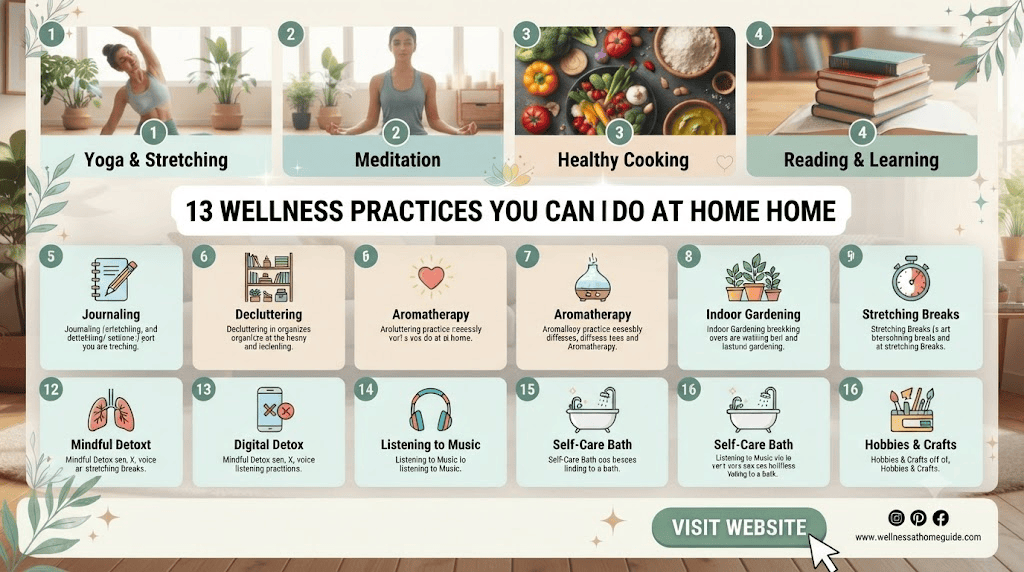
13 Wellness Practices You Can Do at Home
In the modern world, the concept of wellness has often been equated with expensive gym memberships, luxury spa retreats, or exotic getaways. However, the true essence of well-being is not found in a destination; it is cultivated through the consistent, intentional habits we practice within the four walls of our own homes. Your home is more than just a place to sleep—it is a sanctuary where you can nurture your physical, mental, and emotional health.
By integrating specific wellness practices into your daily routine, you can lower your stress levels, boost your immunity, and find a sense of profound inner peace without ever having to step out your front door. Here are 13 comprehensive wellness practices you can start doing at home today.
1. The Art of Mindful Meditation
Meditation is perhaps the most powerful tool in your wellness arsenal. It requires no equipment, only your presence. By dedicating just 10 to 20 minutes a day to sitting in silence, you train your brain to remain calm amidst the chaos of daily life.
- How to do it: Find a quiet corner, sit comfortably with your spine straight, and close your eyes. Focus entirely on your breath—the rise and fall of your chest or the sensation of air entering your nostrils.
- Why it works: Scientific studies show that regular meditation shrinks the amygdala (the brain’s fear center) and strengthens the prefrontal cortex, leading to better emotional regulation and focus.
2. Intentional Breathwork (Pranayama)
While we breathe subconsciously all day, “breathwork” involves conscious control of your breathing patterns to influence your mental and physical state. It is a direct “hack” into your nervous system.
- The 4-7-8 Technique: Inhale for 4 seconds, hold for 7 seconds, and exhale forcefully for 8 seconds. This specific rhythm acts as a natural tranquilizer for the nervous system.
- Box Breathing: Inhale, hold, exhale, and hold again—each for a count of four. This is a technique used by elite athletes and Navy SEALs to maintain composure under pressure.
3. Morning Movement and Yoga Flow
How you move your body in the morning sets the tone for your metabolic rate and your mood. You don’t need a high-intensity workout to reap the benefits; a gentle yoga flow or a series of dynamic stretches can work wonders.
- Flexibility and Flow: Focus on opening up the hips and lengthening the spine, areas that typically tighten during long hours of sitting.
- Home Setup: You only need a yoga mat or a soft carpeted area. Use YouTube tutorials or apps to guide your practice if you’re a beginner.
4. Digital Detox Windows
Our homes are often flooded with the “blue light” and “digital noise” of smartphones, laptops, and televisions. A critical wellness practice is establishing digital boundaries to protect your mental health and circadian rhythm.
- The First and Last Hour: Commit to not checking your phone for the first hour after waking up and the last hour before going to bed.
- The Benefits: This prevents the “cortisol spike” associated with checking emails or social media immediately upon waking, allowing your brain to wake up naturally and peacefully.
5. Therapeutic Journaling
Writing is a form of “brain dumping.” It allows you to externalize the thoughts, worries, and ideas swirling in your head, making them easier to manage.
- Gratitude Journaling: Every morning or evening, write down three specific things you are grateful for. This shifts your brain’s bias from focusing on problems to recognizing opportunities.
- Shadow Work: Use journaling to explore deeper emotions or triggers. Ask yourself, “Why did I feel anxious today?” and let the pen flow without self-censorship.
6. Strategic Hydration Rituals
Hydration is the foundation of physical health, affecting everything from skin clarity to cognitive function. Elevate this simple task into a wellness ritual.
- Infused Waters: Instead of plain water, add cucumber, mint, lemon, or ginger. This adds antioxidants and makes the act of drinking water feel like a treat.
- The Morning Flush: Drink 16 ounces of room-temperature water with a squeeze of lemon immediately upon waking to rehydrate your organs and kickstart your digestion.
7. Culinary Mindfulness and Meal Prepping
Wellness starts in the kitchen. Taking the time to prepare your own food allows you to control the quality of your fuel and turns a chore into a meditative practice.
- Mindful Eating: When you eat, just eat. Avoid watching TV or scrolling through your phone. Pay attention to the texture, aroma, and flavor of your food.
- Nourishing Prep: Spend a few hours on Sunday prepping “whole food” snacks like cut vegetables, boiled eggs, or roasted nuts to ensure you make healthy choices when you’re busy during the week.
8. Optimal Sleep Hygiene
Sleep is the period when your body undergoes cellular repair and your brain flushes out toxins. Creating a “sleep sanctuary” is essential for long-term health.
- Temperature Control: Keep your bedroom cool (ideally around 65°F or 18°C).
- Total Darkness: Use blackout curtains or an eye mask to ensure your pineal gland can produce melatonin without interruption.
- The Wind-Down: Dim the lights in your home 30 minutes before bed to signal to your body that it is time to rest.
9. Creating a ‘Hygge’ Environment
The Danish concept of Hygge refers to a quality of coziness and comfortable conviviality that engenders a feeling of contentment or well-being. Your physical environment deeply impacts your nervous system.
- Sensory Appeal: Use essential oil diffusers (lavender for calm, peppermint for energy), soft textures like wool blankets, and warm lighting.
- Decluttering: A cluttered space often leads to a cluttered mind. Practice “micro-decluttering”—spending 10 minutes a day tidying one small area.
10. Incorporating Micro-Workouts
If you can’t commit to an hour-long exercise session, “exercise snacking” or micro-workouts are highly effective. These are short bursts of activity spread throughout the day.
- The 5-Minute Rule: Set a timer for every hour you sit at your desk. Stand up and do 20 air squats, 10 push-ups, or simply walk around your living room.
- Physical Vitality: These bursts keep your lymphatic system moving and prevent the metabolic slowdown associated with sedentary behavior.
11. At-Home Spa and Self-Care Rituals
You don’t need a professional masseuse to experience the benefits of spa therapy. You can stimulate blood flow and relaxation with simple tools at home.
- Dry Brushing: Before showering, use a natural bristle brush to gently brush your skin in upward strokes. This exfoliates the skin and stimulates lymphatic drainage.
- Epsom Salt Baths: The magnesium in Epsom salts is absorbed through the skin, helping to relax muscles and promote better sleep.
12. Cognitive Expansion and Lifelong Learning
Wellness isn’t just about the body; it’s about keeping the mind sharp and engaged. Stagnation can lead to a decline in mental well-being.
- The Reading Habit: Dedicate 20 minutes a day to reading a physical book. Unlike digital content, physical books improve deep focus and reduce eye strain.
- Skill Acquisition: Use online platforms to learn a new language, a musical instrument, or a craft like painting. Challenging your brain creates new neural pathways (neuroplasticity).
13. Conscious Social Connection
Even if you live alone, social wellness is vital. Human beings are neurobiologically wired for connection.
- Quality Over Quantity: Instead of passive scrolling on social media, schedule a “virtual coffee” or a phone call with a loved one.
- Active Listening: When talking to housemates or family members, practice being fully present. Put away distractions and truly listen to what they are saying. Strong relationships are a primary predictor of long-term happiness.
Conclusion: Consistency Over Intensity
The secret to home wellness is not doing all 13 of these practices perfectly every day. Instead, it’s about choosing a few that resonate with you and performing them consistently. Wellness is a journey of small, intentional choices. By transforming your home into a hub for health and mindfulness, you create a foundation of resilience that will support you in every other area of your life. Start small, stay consistent, and watch your quality of life flourish from the inside out.